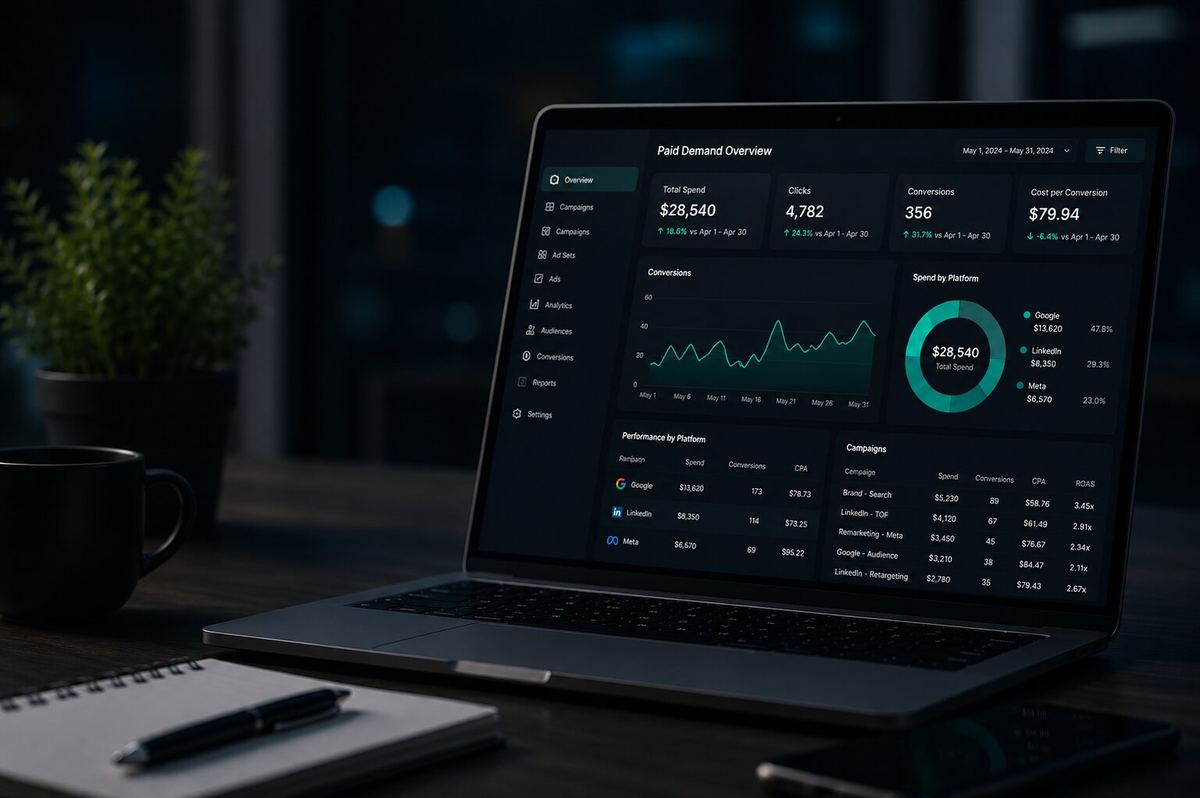
LinkedIn, Google & Meta Ads for B2B, managed end to end. Qualified leads, not impressions.
Most B2B paid campaigns miss them anyway, broad targeting produces volume, not pipeline; generic creative produces impressions, not interest. We fix both. Campaign structure, audience build, full creative production, and a weekly A/B test cycle. Everything measured against cost-per-qualified-meeting, not vanity metrics.
Free · No commitment · Response within 1 business day
Most B2B paid programmes spend budget on the wrong audience. Here is what a well-built programme looks like.
Most B2B paid programmes fail on one of two things. Either the targeting is too broad and the leads that come in do not match the ICP, or the creative is generic and nobody clicks. Some fail on both. Agencies report impressions and click-through rates because those numbers always look good. The number that matters is cost per qualified meeting, and most agencies avoid reporting it because it is harder to make look flattering.
We track every campaign to the meeting. That means connecting ad spend to form fills, form fills to qualification calls, and qualification calls to meetings that match the ICP. A CPL that looks great until you realise none of the leads are your buyer is not a good CPL.
We track campaigns all the way to cost per qualified meeting. A 40 USD CPL sounds great until none of those leads match your ICP. We would rather tell you that upfront than report a flattering number that puzzles your sales team.
The full paid pipeline engine, owned by us.
Three platforms. Three different jobs.
From strategy sign-off to campaign live in seven days.
Platform selection and audience design.
We map your ICP to platform capabilities and decide where your budget will produce the best qualified pipeline. Channel mix, bid strategy, and targeting criteria agreed before any build begins.
Ad copy, static, and video produced in-house.
Our creative team builds all assets. You review and approve before anything goes live. We never ask you to supply creative. The people managing the campaigns should be the ones building the ads.
Campaign structure, audiences, and tracking.
Ad accounts configured, audiences built, conversion tracking verified end to end. Landing pages reviewed or built. Technical setup tested before any spend is committed.
Live with a weekly test plan from day one.
Campaigns go live with a documented A/B test plan for the first four weeks. Week one tests audience segments. Week two tests creative concepts. Week three tests landing page variants. Budget shifts to what wins.
Why we own the creative entirely
Most paid media agencies outsource creative or hand it back to the client. We think that is backwards. The quality of what someone sees before they click is the biggest single variable in whether they convert.
Our creative team sits next to our media buyers. When a test shows a particular angle is outperforming, we can turn around a new variant in 48 hours. When a message is not resonating, it gets replaced before it burns more budget.
Questions before handing over your ad budget.
Related Reading
Practical guides that go deeper on the topics behind this service.
9 B2B Lead Generation Strategies That Actually Work
Most B2B lead generation advice is recycled noise. This is what is actually moving pipeline for companies today with data to back it up.
Read articleAccount-Based Marketing Strategy: How to Run ABM Without an Enterprise Budget
ABM used to require a $500K martech stack. Modern tools have changed that. Here is how to run a genuine ABM motion with a small team and a realistic budget.
Read articleB2B Demand Generation: Building Pipeline Beyond Cold Outreach
Cold outreach fills the pipeline faster. Demand generation fills it more efficiently over time. The best B2B companies run both simultaneously.
Read articleB2B Lead Nurturing: How to Convert Interest Into Revenue
Most B2B companies are better at generating interest than converting it. A structured nurturing process is where the real money is made.
Read articlePart of a full-funnel pipeline system.
Cold email and LinkedIn sequences at scale.
Learn more →Qualify and book meetings with dedicated SDRs.
Learn more →Compounding pipeline from organic search.
Learn more →CRM, routing and dashboards to close the loop.
Learn more →See real results from engagements like yours
Case studies with pipeline numbers, meeting volumes, and market entry outcomes.
View case studies → All ServicesFive services. One pipeline engine.
Cold email, LinkedIn, SDR, paid demand gen, and revenue operations, built together.
Explore all services →Ready to build pipeline in this channel?
Free 30-min strategy call. No commitment, no pitch. Just a clear plan for your pipeline.